 EN
EN TR
TR AR
AR RU
RU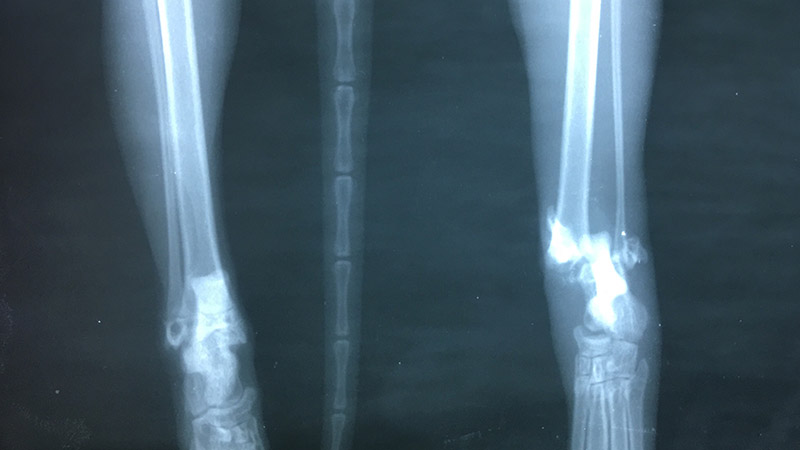
In orthopaedics, deformity refers to deflection and misshapenness in the bones. Deformities are commonly seen in the arms and legs while they can also be accompanied by disorders of the spinal skeleton. Deformities are usually rooted in puberty, childhood, and adolescence and they are likely to affect daily life at later ages. Therefore, early diagnosis and treatment is vital, regardless of congenital or subsequent occurrence of the deformity. Undiagnosed deformities may adversely affect a person’s mobility. Deformity initially manifests itself with posture and function problems while advanced deformity issues can seriously interfere with life comfort. To avoid these setbacks, patients need to undergo deformity correction surgery.
Deformity surgery is planned specially for each patient according to the patient’s age and the location and severity of the deformity. Diagnosis in early stages can fix the deformed region while a delay in diagnosis may necessitate treatment of the neighbouring regions and, therefore, a more complex intervention.
Deformity correction surgery is carried out with plaque-screws, external fixators (fixation devices applied externally to the limbs, Ilizarov-type rings, computer-assisted or rail systems), or intramedullar nails (fixation devices placed in the internal cavity of the bone) in accordance with the type and severity of deformity, the patient’s age, and characteristics of the related bone structures.